

A variety of project developers pay forest landowners to participate in voluntary carbon markets. Many developers only work with large landowners, but some programs allow smaller landowners to participate in this burgeoning market and conservation practice with as little as 30 acres of woodland. This webpage provides an overview of three forest carbon programs marketing to small-to-medium-acreage forest landowners in Wisconsin. It also offers considerations for individuals interested in participating in these or different programs, as other carbon programs are available in Wisconsin—and more will likely appear over time.
Jump to section
In all three programs discussed below, the landowner retains ownership of their property, recreational rights (e.g. hunting, fishing), and firewood use (within cordage limits) during the enrollment period. Managed Forest Law (MFL) lands are potentially eligible, depending on the harvesting requirements in the MFL plan. Meeting with a forester from the carbon program in addition to your MFL forester is the only way to determine compatibility. If timber harvesting is not allowed on a property, it is likely not eligible for these carbon programs.
The contents of this webpage are provided for informational purposes only. Mention of a specific carbon program does not represent an endorsement or recommendation by Extension. Carbon markets are also rapidly developing. This webpage was last updated in February 2026. Program availability, rules, and requirements may have changed since then. For the latest information, visit the program websites.
Family Forest Carbon Program (FFCP)
The Family Forest Carbon Program is run by the American Forest Foundation and The Nature Conservancy. Within Wisconsin, the program is available to private landowners with property in the north and north-central regions.
What land is eligible?
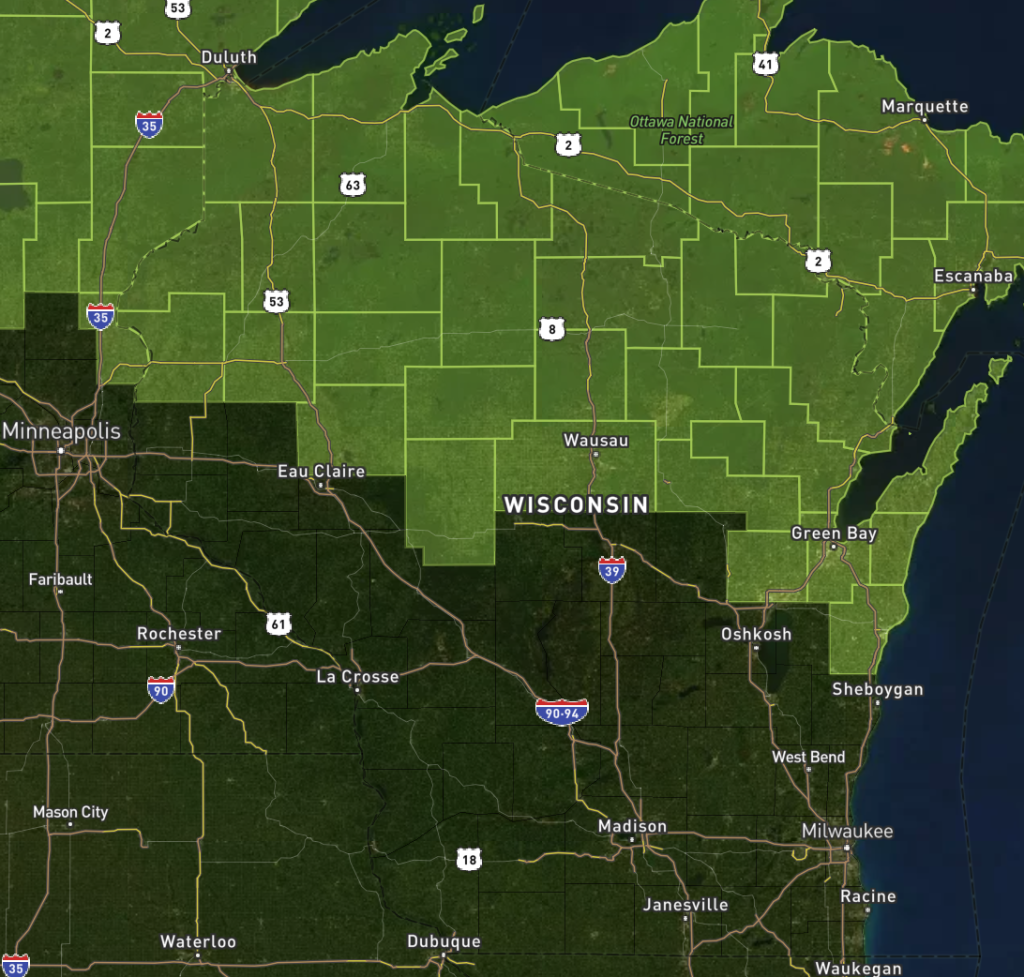
To be eligible for FFCP, a landowner must have at least 30 acres of forestland with any tree species (except that forests dominated by aspen and/or birch are not eligible). FFCP allows for partial land enrollment, meaning the landowner does NOT need to enroll all of their forested land. The landowner must have an active forest management plan. FFCP can provide financial support to either develop a forest management plan or update an existing one to incorporate forest carbon.
How does it work?
Rather than paying directly for carbon, FFCP pays Wisconsin landowners for growing mature forests with trees that are older and larger than those in other local forests. To create the carbon credits that they sell, FFCP compares the carbon stored in enrolled properties to the storage in similar unenrolled properties over time (a dynamic baseline).
FFCP contracts last 20 years and there is no extended monitoring period. A typical payment is a total of $200 per acre over the 20-year contract, which means an average of $10 per acre each year. The landowner may be eligible for a premium payment which increases base payments of $200 per acre by 20%. In return the landowner agrees to implement FFCP practices with the financial assistance of the Natural Resources Conservation Service. These payment rates do not change when prices in the voluntary carbon market change, nor do they change if the landowner chooses to harvest. FFCP allows for timber harvesting within certain basal area limits. If a harvest is conducted, the landowner must also pay a forester for pre- and post-harvest inspections.
Forest Carbon Works (FCW)
Forest Carbon Works is a public benefit corporation with offices in Minnesota, New York, and Colorado. FCW operates in the lower 48 states, including all of Wisconsin.
What land is eligible?
To be eligible, a landowner must have at least 500 acres with a native forest type. Plantation forests of native trees are eligible. FCW allows for partial land enrollment, meaning the landowner does NOT need to enroll all of their forested land. A certified forest management plan within one year of enrollment or before a commercial timber sale. If the landowner does not intend to harvest, no forest management plan is required.
How does it work?
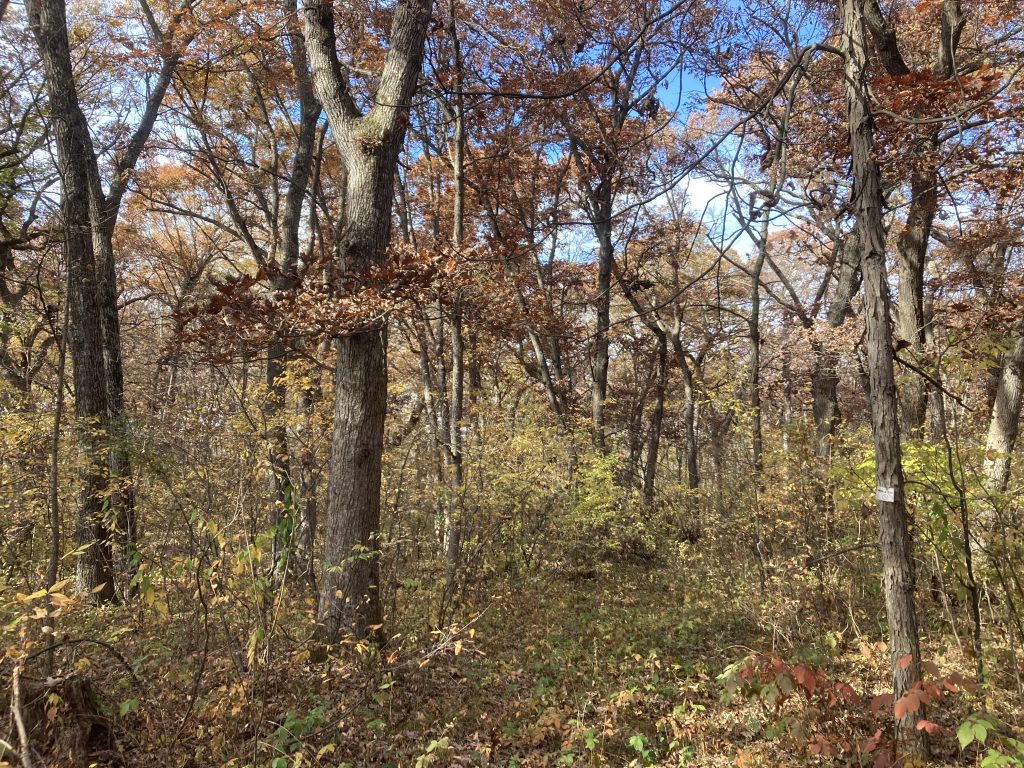
FCW pays landowners based on the carbon dioxide removed from the atmosphere by their trees’ new growth. Each property is assessed individually, so payments may vary from property to property. Similar to FFCP, FCW compares the carbon stored in enrolled properties to the storage in similar unenrolled properties over time (a dynamic baseline).
FCW contracts last 40 years. Landowners receive payments equivalent to 35% of the carbon credits generated by the property. Under this revenue-share structure, annual payments can change if the market prices of carbon credits change, but current payments tend to be around $10-$15 per acre per year. FCW allows for timber harvesting of up to 30% of a forest’s growth annually and up to 50% of growth once in any 5-year period. FCW must approve any planned commercial harvests, and harvests must meet the certification guidelines of the Forest Stewardship Council, Sustainable Forestry Initiative, American Tree Farm System, or Wisconsin’s Managed Forest Law program.
LandYield
LandYield is a company founded in 2023. LandYield currently operates in the Southeast and Northeast U.S., along with 6 states in the Midwest: Indiana, Illinois, Michigan, Minnesota, Missouri, and Wisconsin.
What land is eligible?
To be eligible, a landowner must have at least 40 acres with a naturally occurring forest type or a native tree plantation forest. LandYield allows for partial land enrollment (like FFCP and FCW), and a forest management plan is not required to participate (unlike FFCP and FCW).
How does it work?
Unlike FFCP and FCW, LandYield pays landowners to not conduct commercial timber harvests for the first 20 years of enrollment. LandYield contracts last for 40 years overall, with one 20-year harvest deferral period and one 20-year monitoring period. To participate, a landowner leases the timber rights to LandYield for the duration of the 40-year contract.
In the 20-year harvest deferral period, landowners are paid a fixed price for the first 3 years. In years 4-20, landowners receive a revenue-share payment of 55% of the property’s generated carbon credits. Each property and its forest conditions are assessed individually, so payment rates may vary from property to property. During the 40-year contract, some small-scale cutting is allowed, like for personal firewood use. However, these activities may reduce carbon payments over time. In the monitoring period (years 21-40), landowners may harvest the growth in excess of year 20’s carbon stock, but harvests are not allowed to decrease the carbon stock below the level present in year 20. LandYield anticipates being able to offer landowners the option to extend harvest deferrals in years 21-40 and receive more payments, but this will be dependent on future carbon registry rules.
What to consider before enrolling in a carbon program

It’s important to be fully aware of the benefits and downsides of the carbon program you may be interested in. Carbon programs align well with some short- and long-term management goals, but may not with others.
Before you enroll, you should consult with a Wisconsin professional forester, who can help you navigate the forest management implications of the program. Make sure that you understand everything in the program contract before signing. Here are a few key questions you can ask a program representative:
- As the forest landowner, what are my responsibilities to manage the existing carbon?
- How will carbon stocks be monitored on my land and how often are carbon inventories performed?
- What is the payment schedule?
- How will payments change if a severe weather event or forest pest results in forest loss?
- If I want to perform a timber harvest, what are the guidelines and how do I get permission from the program?
- Are other forest management activities, like prescribed fire or invasive species removal, not allowed?
- What types of companies will buy the carbon credits associated with my forest?
- What happens if I sell or transfer ownership of my land before the end of the contract?
- If I have an existing conservation easement, am I eligible?
- If I am part of the Managed Forest Law (MFL) program, am I eligible?
- What are the penalties for leaving the program before the end of the contract?
Related to that last question, note that FFCP, FCW and LandYield all have forest carbon program enrollment tied to the land. If a property is sold by a landowner currently enrolled in a forest carbon program, the new buyer is responsible for continuing enrollment and following the contract. For LandYield, the property seller remains liable for any financial penalities if the buyer leaves the contract early. For FFCP and FCW, the property buyer is liable for any financial penalties if they choose to leave the contract early.
Additional forest carbon programs may expand to Wisconsin in the coming years. Keep in mind that participation in a program now could make your land ineligible for future programs. If FFCP, FCW, and LandYield don’t align with your forest management objectives, maybe another future program will.
Further Reading
Keep learning about…
If you have questions about forest carbon or other topics related to the changing climate, or if you want to provide feedback on this webpage, contact:

Keith Phelps
Working Lands Forestry Educator
keith.phelps@wisc.edu
920-840-7504

Scott Hershberger
Forestry Communications Specialist
scott.hershberger@wisc.edu
608-263-5804
Written by Scott Hershberger (UW–Madison Extension), Keith Phelps (UW–Madison Extension), and Peyton Higgins (Wisconsin Initiative on Climate Change Impacts) and reviewed by the Wisconsin Initiative on Climate Change Impacts Forestry Working Group. Page last updated February 2026.